


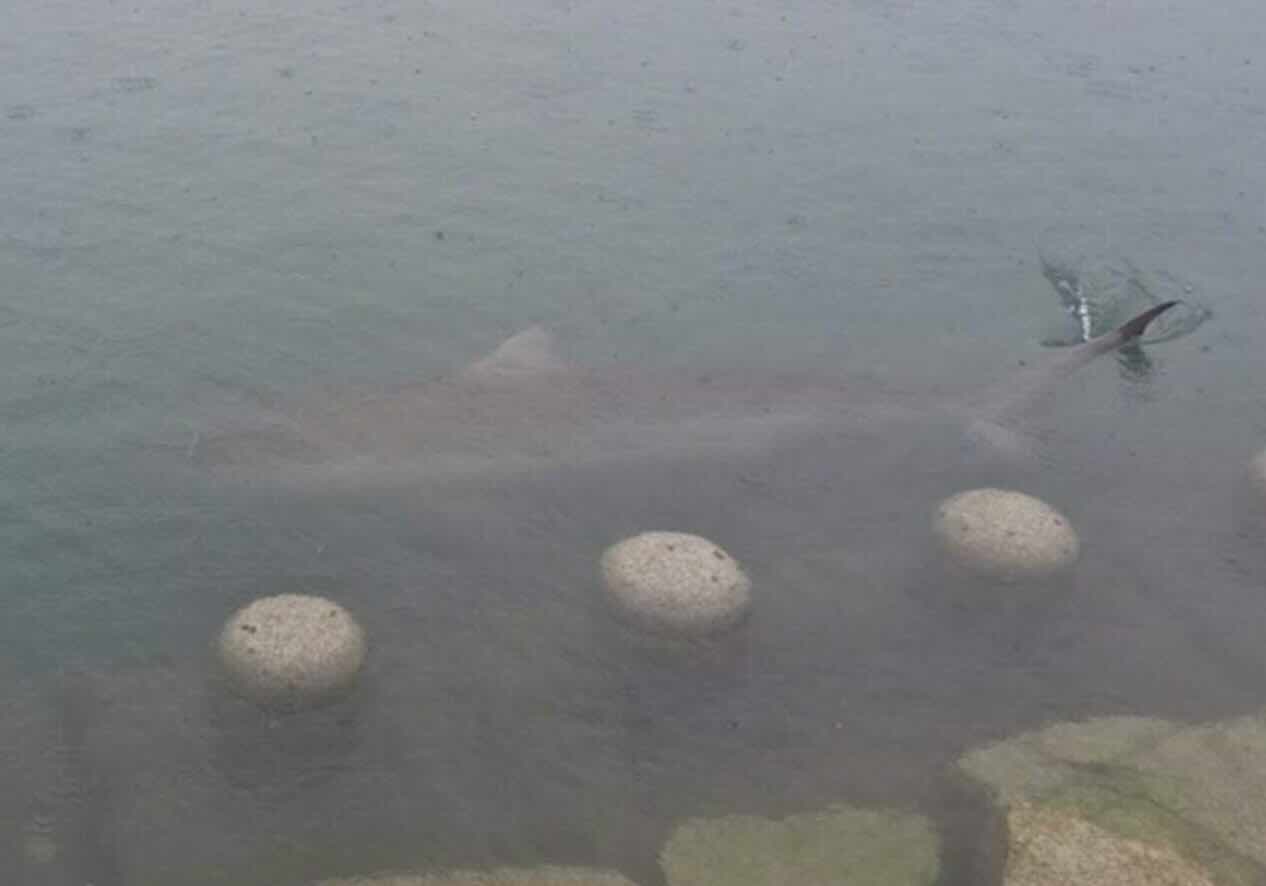

Busan authorities will make a third attempt to guide the shark known as “Bukangi” out of the North Port Waterfront Park waterway on Wednesday amid growing concerns about its health as temperatures begin to fall.
The operation follows two unsuccessful attempts to return the shark to the open sea after it was first discovered in the park’s waterway on September 18.
Officials are concerned that Bukangi has not been observed feeding and could face increasing health risks as water temperatures drop. A sharp decline in air temperatures is also forecast beginning October 22.
Representatives from ten organizations, including the Ministry of Oceans and Fisheries, National Marine Biodiversity Institute of Korea, National Institute of Fisheries Science and Busan Port Authority, met on October 20 to finalize plans for the operation.
Unlike the previous attempts, the latest effort will involve a combination of nets, floating work platforms known as pontoons, divers and drones.
Preparations begin Tuesday afternoon with underwater surveys using sonar equipment and underwater drones to identify obstacles and examine the seabed near the waterway entrance.
On Wednesday morning, crews will install guiding nets and floating platforms near pedestrian bridges five and six before beginning the operation later in the day.
The plan involves gradually moving nets toward the open sea while blocking the shark from swimming back into the inner waterway.
Drones will monitor Bukangi’s movements from above, while divers check underwater conditions and ensure the nets remain properly positioned.
Marine specialists will oversee the operation and monitor the shark’s behavior, adjusting the approach if signs of distress appear.
October 21 was selected partly because no cruise ship movements are scheduled that day, reducing potential interference with the operation.
Authorities will also restrict access to pedestrian bridges five and six and surrounding work areas, with additional safety personnel and patrols deployed.
Bukangi has attracted considerable public attention during its month-long stay at North Port Waterfront Park, with more than 1.5 million people visiting the area since the shark was discovered.
Although recent observations found no major abnormalities in its condition, experts have warned that falling water temperatures could pose a serious risk if the shark remains in the enclosed waterway into November.